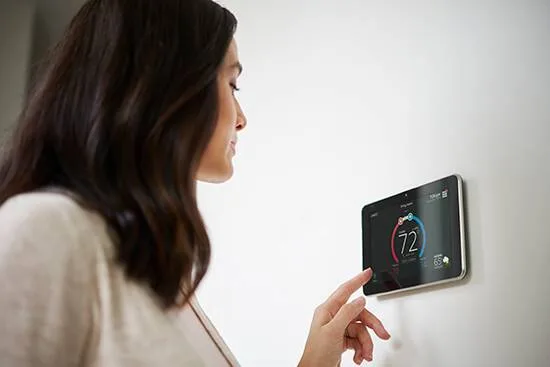

A smart thermostat is a Wi-Fi-connected temperature control device that uses sensors, learning algorithms, and occupancy detection to automatically optimize your home's heating and cooling schedule. Unlike basic programmable thermostats that follow a fixed schedule, smart thermostats adapt to your habits, detect when you are home or away, and can be controlled remotely via smartphone apps or voice assistants. Leading brands include Google Nest, ecobee, and Honeywell Home. Smart thermostats can integrate with other smart home devices and often provide energy usage reports that help homeowners understand and reduce their consumption. Studies show they can reduce heating and cooling costs by 10% to 23% compared to manual thermostats.
/smɑːrt ˈθɜːrməstæt/
A smart thermostat is a Wi-Fi-connected temperature control device that uses sensors, learning algorithms, and occupancy detection to automatically optimize your home's heating and cooling schedule. Unlike basic programmable thermostats that follow a fixed schedule, smart thermostats adapt to your habits, detect when you are home or away, and can be controlled remotely via smartphone apps or voice assistants. Leading brands include Google Nest, ecobee, and Honeywell Home. Smart thermostats can integrate with other smart home devices and often provide energy usage reports that help homeowners understand and reduce their consumption. Studies show they can reduce heating and cooling costs by 10% to 23% compared to manual thermostats.
What does a smart thermostat do?
A smart thermostat learns your schedule, detects occupancy, and automatically adjusts heating and cooling for comfort and efficiency. You can also control it remotely via phone or voice assistant.
Source: The Cooling Company


Smart thermostats learn your habits and optimize heating and cooling automatically.
In Las Vegas, where cooling bills dominate household energy costs, a smart thermostat can make a significant impact. It automatically raises the temperature when you leave for work, pre-cools your home before you return, and adjusts based on outdoor temperature forecasts — all without you touching a button. During extreme heat waves, remote access lets you monitor and adjust your system from anywhere.
Use your smart thermostat's energy reports to identify when your HVAC runs most and experiment with setback temperatures. In Las Vegas, raising your set point by just 2°F when you are away can save 5% to 10% on cooling costs.
“Use your smart thermostat's energy reports to identify when your HVAC runs most and experiment with setback temperatures. In Las Vegas, raising your set point by just 2°F when you are away can save 5% to 10% on cooling costs.”
The Nest Learning Thermostat, introduced in 2011 by Tony Fadell (a co-creator of the iPod), pioneered the smart thermostat category and demonstrated that automated temperature management could save homeowners an average of 10-12% on heating and 15% on cooling.
Do smart thermostats really save money?
Yes. Studies show average savings of 10-23% on heating and cooling bills, depending on the thermostat model, home, and climate.
Are smart thermostats hard to install?
Most are designed for DIY installation and take 30 to 60 minutes. However, if your home lacks a C-wire, you may need a professional to add one.
Which smart thermostat is best for Las Vegas?
Models with remote sensors (like ecobee) work well in Las Vegas homes where temperature varies between rooms. Any major brand with learning and geofencing features will deliver solid savings.
Need help with smart thermostat? Our licensed technicians in Las Vegas are ready to assist.
Fill out the form below. We typically respond within minutes.